
Even as a small child, I (Marius), influenced by my parents, was fascinated by nature. I loved shows like Daktari, even though it was already quite old by then. Nature documentaries were my comics, and Disney's Funny World of Animals was on so often that I could practically recite the lines by heart. I think my wanderlust grew out of this parental influence – discovering new things and appreciating the natural world of our beautiful planet. I was always drawn more to green spaces than to concrete jungles, and even today I feel most at home in nature.
Over the past few years, Franzi, and later our two boys, Leo (7) and Casper (5), and I have traveled the world, primarily in our campervan. We explored western, northern, and southern Europe . In 2022, we shipped our campervan to North America and drove across Canada and the USA ( see blog post ). In 2023, we switched to bicycles and cycled across the Alps with our two children ( see blog post ). In 2024, our last big trip before Leo started school took us to the North Cape and through the wild nature of Scandinavia. We wrote a book about this journey ( see book ).

Nature-sensitive education – nature as a teacher
The focus of our travels, and especially our preparations, was always on experiencing and connecting with natural environments and their animal inhabitants. We read stories about our future travel destinations and prepared ourselves with books about the flora and fauna. Because one thing was very important to us as parents: we wanted to pass on our enthusiasm for and respect for nature to our children. Not by lecturing them, but by sparking their enthusiasm, by letting them see and experience the wonders of the world for themselves.
Watching grizzly bears hunt salmon, hearing red deer bellow, identifying birds by their songs, identifying plants, and learning to love every animal and plant. We believe that, especially for the younger generation, a sensitive understanding of our ecosystem is the most valuable key to its preservation.
And so our two are not only professionals when it comes to animals, they want to become veterinarians and animal rights activists, eat a vegetarian diet for the sake of the animals, and give their grandparents disgruntled looks when they swat a fly.
Even though long-distance travel is very stressful for nature, we want to show the children more of this wonderful world, because this also strengthens their social skills. Besides nature, we also actively try to introduce them to foreign cultures, religions, and people from different backgrounds.

The African dream – why it became Kruger National Park
This led to a desire in recent years to see more of the world, and above all to travel to a continent we had never visited with the children before – Africa. This very diverse continent, which I fell in love with as a child through countless wildlife documentaries, and whose fascination still captivates me, even though I have never been there.
The question of where to go was quickly answered. There aren't many places where you can experience wild animals and nature as impressively as in one of Africa's largest national parks: Kruger National Park in South Africa. It is particularly famous for its enormous biodiversity and varied landscape, ranging from savannahs and bushland to rivers.
The park is vast: stretching 350 km from north to south and 30–40 km from west to east, it's the perfect place to explore by car. Self-drive safaris are permitted in Kruger, allowing you to discover the park at your own pace.

Planning with an experienced tour operator – relaxed travel with children
Our campervan trips usually only involve a rough plan, which often gets thrown out the window along the way. Traveling to Kruger National Park by rental car is considerably more complex. That's why we enlisted the support of For Family Reisen , specialists in long-distance travel with children and with years of planning expertise.
Since we no longer had to deal with the countless bookings of accommodations, rental cars, and safaris, nor with detailed route planning, we could focus more specifically on what we wanted to discover. We scoured books for information on special animals, marked natural wonders along our route, and above all, prepared ourselves for the African adventure with stories and films.
The perfect time to travel for us was during the summer holidays, because the temperatures in the South African winter are still mild during the day, but not hot, and above all, the trees and bushes have hardly any leaves, making it easier to observe the animals. Another advantage of traveling in winter is the scarcity of mosquitoes and therefore a very low risk of malaria.
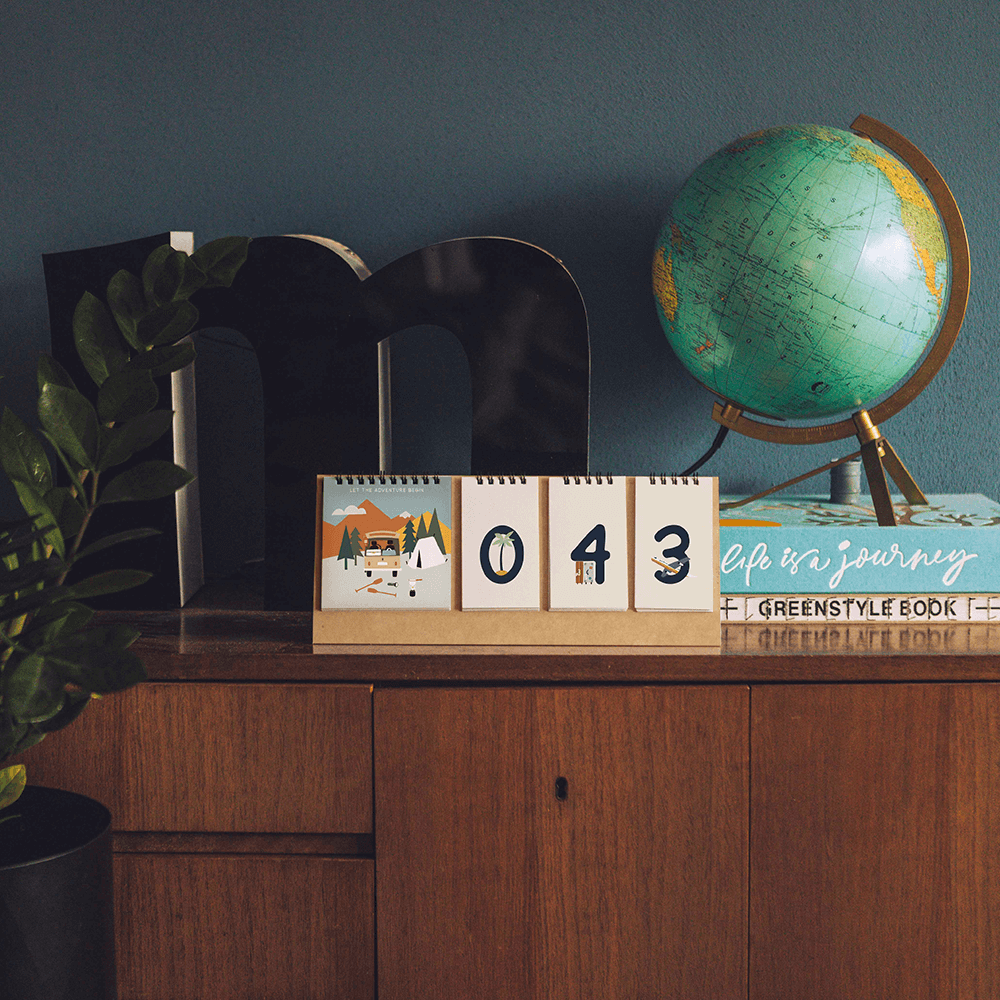
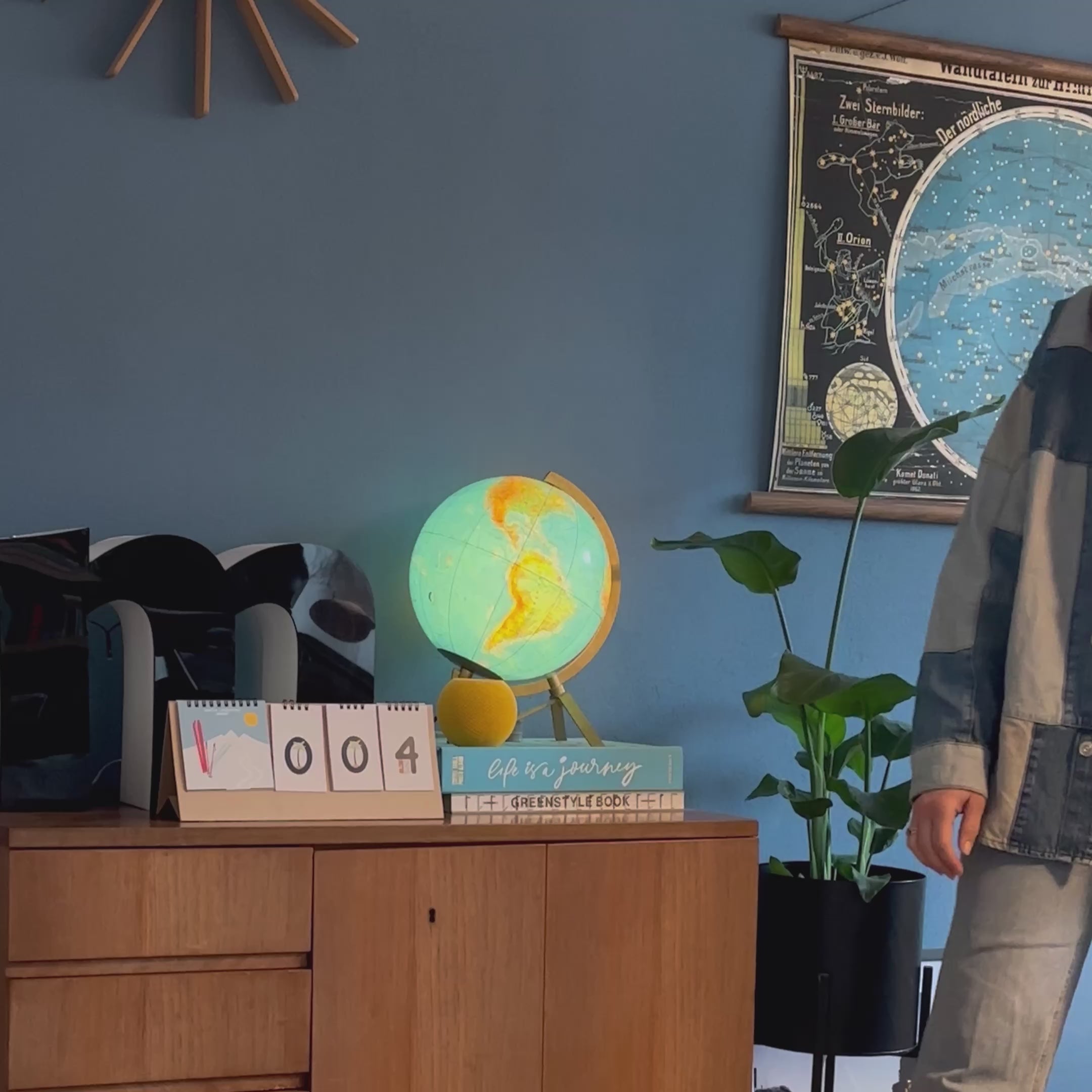
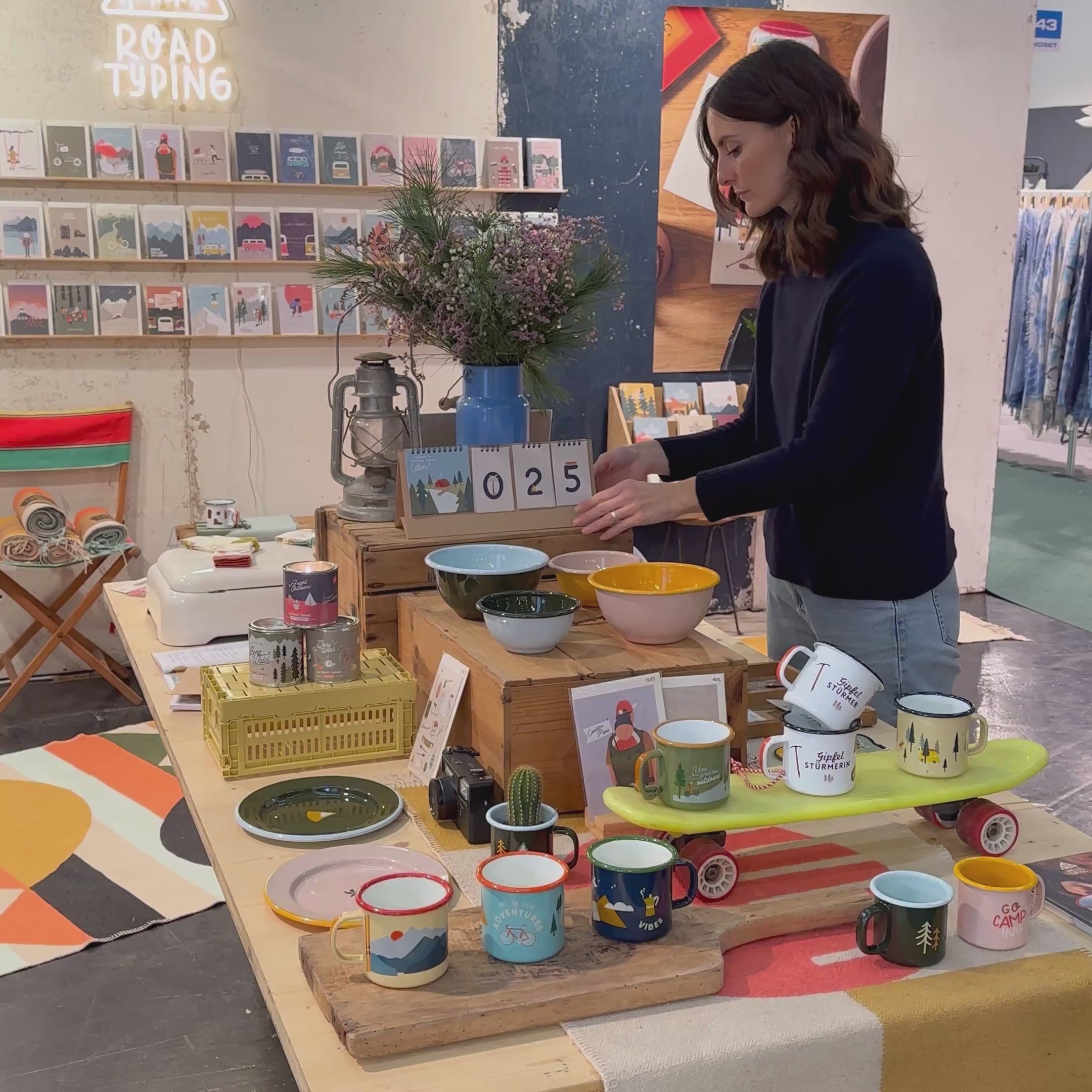
So now we're just counting down the days, of course with our countdown timer , until it finally starts.

Travel to South Africa – Long-haul flight with kids
We're off at the beginning of August, from Munich to Johannesburg. It's our fourth long-haul flight with the kids, so we already know pretty much what's important: good times and snacks, snacks, snacks .
Our travel agent at For Family Reisen had already booked the perfect departure and transfer times for our flight in advance. This meant a relaxed afternoon flight from Munich to London, and after a short layover, on to Johannesburg.
Since the flight departs at 7 p.m. and takes almost 13 hours, we're in sync with the children's normal sleep schedule, even though we adults (aka bed and pillows) don't sleep as much as the boys. The little ones only wake up again when the plane lands, and since there's no time difference in South Africa, their circadian rhythms aren't disrupted.
Furthermore, as a German citizen, you don't need a visa , so we can go straight from the baggage carousel out of the airport and get our first taste of South African air.
At the rental car counter, we were greeted by a friendly couple who were handling the briefing for the tour operator . They gave us our roadbook and explained a few things about driving on the left, as South Africa drives on the left. With respect, anticipation, and a great sense of adventure, we rolled out of the parking garage in our rental car.

From Johannesburg to Kruger National Park
We will stay another night in Johannesburg before driving the 500 kilometers to Phalaborwa, one of the entrances to Kruger National Park, the following morning.

The drive itself is more relaxed than expected, the roads are perfect, and you get used to driving on the left quite quickly, which is also very well-organized. There's plenty to see along the way: fascinating landscapes, trees inhabited by weaver birds at the petrol station, and the makeshift townships surrounding cities.
The latter sparked a profound discussion among the children about equality and justice, which made our parents' hearts leap for joy. If only we had all remained a little more like children.
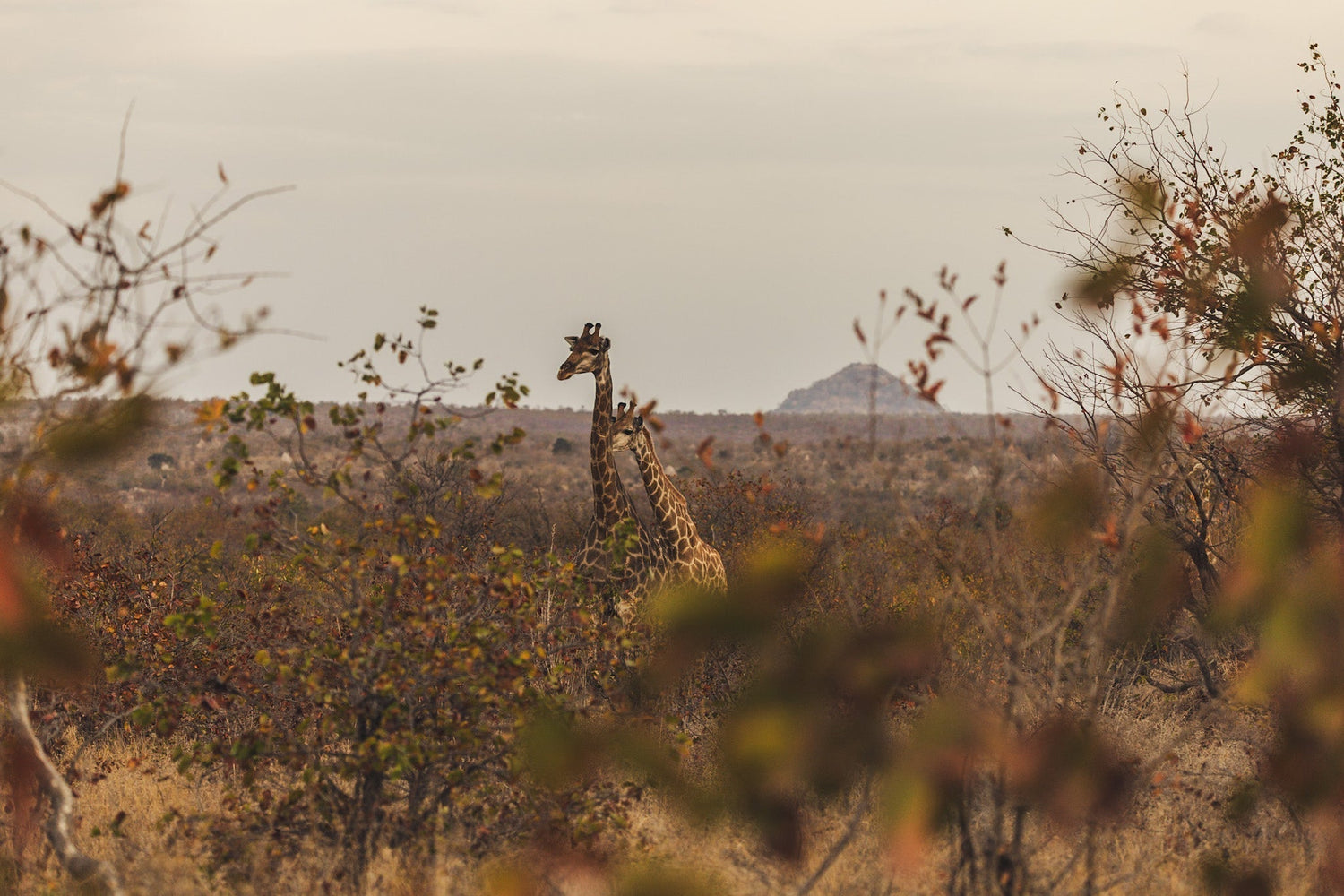
And suddenly we see our first giraffe next to the road in a private reserve – a magical moment and a big hello: Here in Africa!
A short time later, after nightfall – because it is pitch black here at 6 pm – we reach Phalaborwa and our accommodation, just 5 minutes away from the gate to Kruger National Park.


First encounters in Kruger – our self-drive safari
The next morning , after breakfast and equipped with plenty of snacks, we head to the Phalaborwa Gate . There, we have to register briefly and pay the entrance fee of approximately 70 euros for the four of us. The shop also sells various maps with lists of animals and plants that you can spot and then check off.
The most important essentials are of course our binoculars and my camera with a large zoom lens.
In the park, we enjoy a relaxed drive on the paved road before tackling the first loop and thus the gravel road via a side road. Generally, the park is crisscrossed by major main roads, which are also paved. From these roads, numerous loops or connecting roads branch off, often leading to waterholes or special viewing points.

And then it begins: First, impala antelopes appear beside us, so close and so many of them. Then we watch a few red-faced spoonbills wade through the water, spot our first giraffe – right by the tree behind the road we're driving on – and a small musk antelope. This small antelope species only has a shoulder height of up to 40 centimeters.
Suddenly we hear a loud cracking sound and see the huge elephant tearing branches from the tree with relish in order to eat them.
Until our lunch break, we observed zebras, more elephants, and buffalo. We were absolutely thrilled and hadn't expected to see such a variety of animals in such a short time. But that's precisely what makes Kruger so special with its biodiversity.

Crossing the area in your own vehicle is also a small adventure and perfect if you want to take your time observing the animals.
Within the park, there are designated picnic areas, often with a small shop or restaurant; sometimes you can even stay overnight in lodges. So we unpack our food at a picnic table and within seconds are surrounded by dozens of iridescent blue-shouldered glossy starlings and the amusing red-ringed hornbills, a curious hornbill. Countless ground squirrels are also hoping for a scrap.

After our refreshments, we continued along the Letaba River, where we spotted hippos for the first time in the distance. Elephants were also bathing. If you paused to observe the scene, you discovered so much more – from wildebeest to ospreys, and various antelope species such as waterbuck and kudu. The water is life-giving, attracting every species.
The road takes us a little further away from the river, and on the way back to the lodge we spot ostriches and a large herd of elephants, as well as many giraffes intertwining their necks.

Completely overwhelmed by this first day in the national park, we return and can hardly believe our luck. Above all, our anticipation for the coming days is boundless.
Across the park – from Phalaborwa Gate to Orpen Gate
Since the national park is very large and its landscape so diverse, we take advantage of our change of accommodation and drive through the park instead of along the "normal" road. There are several gates through which you can enter and exit the park.
So we drive from Phalaborwa Gate via the Olifants Rest Camp to Orpen Gate . In total, that's 250 km, which will take us the whole day.
Right at the start of our safari, we encounter the mysterious ground hornbill, which in many African cultures is associated with myths about rain, drought, or weather. The large birds approach us with great curiosity.

A little further on, we take a loop to the waterhole and come very close to crocodiles and a group of hippos. It's indescribable to be able to observe these enormous animals from such a short distance, to hear them exhale or make their grunting noises.
Our small rental car, not an off-roader, takes us across a dry riverbed on our gravel road, where two saddle-billed storks are gracefully walking along. The children think the impressive birds, up to 145 cm tall, with their red and black striped beaks, look rather funny.
Just before we take a short break, we come across a large family of baboons calmly crossing the road. From the alpha male to the baby monkey, they are all there.
After seeing many more zebras, giraffes, and elephants, we reach the Olifants Rest Camp. Besides lodges for overnight stays, there is a restaurant and a shop, but above all, a large viewing platform above the Olifants River delta – the view takes our breath away.

We make ourselves comfortable and scan the vast expanse with binoculars, spotting hippos, elephants, antelopes, baboons and crocodiles frolicking in the water, drinking something or devouring the lush green plants nearby.

At all park entrances and in the various picnic areas, large information boards are displayed for each section of the park, marking where which animals have been sighted. One board shows the previous day's sightings, and another the current day's. This helps visitors find their way around, as some animals don't migrate as much as others. Rhinos are not listed here for their protection.

We continued our journey, passing the adorable warthogs, which we personally grew very fond of, numerous helmeted guineafowl, a herd of blue wildebeest, vultures, several bird species, and the enormous kudus. After nightfall, we reached our new lodge for the next two nights.
Guided Game Drives – Animal Knowledge Instead of Just Photos
Matt, the manager of our next and probably most beautiful lodge, was already waiting for us, visibly excited. He had been worried about us because we hadn't arrived by nightfall. Now he was extremely relieved.
The darkness isn't the problem here, but rather the many animals that become active at this time of day. The unmarked roads are also a challenge in the evenings, so we're glad to have arrived.
We are also advised to stay only on the illuminated paths within the Bush Lodges, as leopards occasionally roam these paths, and this immediately creates a bit of a thrill.

So far, we've been received so warmly and courteously everywhere, always had pleasant conversations, and the children immediately felt at home. Here you can really see the experience and the excellent choice of accommodations made by our tour operator.
Well-rested and refreshed, instead of going to the national park, we're going on our first game drive today – a guided safari in the lodge's private reserve.

The stereotypical Land Cruiser with safari body is already waiting for us; the children are not only thrilled by the vehicle, but especially by the guides who accompany the game drive.

We learn an incredible amount about the animals and life in the bush, discovering tiny inhabitants like the antlion, the small larva of the antlion fly. We're told that besides the well-known Big Five, there are also the Small Five and the Ugly Five. We also get a lesson in tracking, follow trails, and begin to distinguish between different types of droppings.
Now we know that black rhino dung is reddish and lion dung is pure white and hard. It's incredibly exciting and educational for the children and us, even though we hardly see any animals.

But suddenly, quite unexpectedly, we cross a small path intersection, and there lies a leopard in the sand, sunning itself. We are able to observe it for a few minutes before it retreats back into the bush.
Wow, that was magical! We are grateful for this moment, because you only get to see this beautiful animal very rarely.

Such a private game drive, which For Family Reisen organized for us, is highly recommended.
Still buzzing from the experience, we return to the lodge, where we first relax by the pool and enjoy the warm sunshine. In the evening, the braai is already being lit in the boma, a sheltered fire pit – a South African barbecue tradition, vegetarian especially for us and so delicious.


Panorama Route – Canyons, waterfalls and mountain villages
After three intense days on safari, we want to explore the hinterland along the Panorama Route. This scenic road leads over the Drakensberg Mountains, past deep canyons and countless waterfalls.

Here you also gain authentic insights into the simple life in the poor mountain villages. These impressions are formative and make us humble, acknowledging how fortunate we were to have simply been born in another country.
Naturally, the children are also affected by all of this; they ask many questions, but are particularly bothered by the now visible garbage around the towns and townships.
Arriving at the Three Rondavels, a rock formation resembling traditional hats and thus named as such, we are rewarded with a breathtaking view over the Blyde River Canyon. We feel a bit like we're at the Grand Canyon in Arizona.

Then we turn around and see the many small vendors at the View Point offering their beautiful, handcrafted souvenirs.
We continue driving and suddenly find ourselves on a newly paved road in the middle of a dense forest of eucalyptus and later pine trees, laid out in a chessboard pattern. After the dry, barren landscape of the last few kilometers, it seems completely alien.
We discover that these are industrial monocultures that harm the ecosystem through water depletion, soil degradation, and habitat destruction. This gives the forest we otherwise love a strange aftertaste.
But it is precisely these kinds of experiences that shape us and our children on this journey.
A little further on, at the “God ’s Window ” , we find the local biosphere again – and even more: Due to the high altitude and the resulting humid climate, a small rainforest has formed here, which is growing lushly.

At the viewpoint itself, we meet a school class, and the children are so happy to see our two blond friends. Everyone greets them, and they smile mischievously back.
To conclude the Panorama Route, a short stop at the Graskop glass lift is highly recommended. Here, you can descend deep into a canyon and explore the local flora and fauna along an educational trail. Various signs describe the canyon's inhabitants, from butterflies to monkeys.

After this exciting day in the mountains, we arrive at our next accommodation in Hazyview. Thanks to the region's subtropical climate, bananas and macadamia nuts are the main crops grown here, and the vegetation is correspondingly lush.

Safety in South Africa – our honest experience
Before this trip to South Africa, I naturally studied the safety recommendations extensively, including those from the German Federal Foreign Office. For Family Reisen addressed many of the concerns beforehand in direct discussions with us, but a few lingering reservations remained.
These were also taken by the local people. We always felt safe and, above all, welcome, and were warmly received by very open-minded Africans of all skin colors.
My biggest concerns were with the Kruger National Park's infamous "Numbi Gate " entrance, as the access road runs directly through a township where tourists have been repeatedly mugged. So I spoke with the lodge manager, and she said it was somewhat exaggerated by the media – like so much else – and that nothing had happened for years. However, she added that one could use the Phabeni Gate as an alternative, which was closer anyway.
I think that describes the stages I was in before and after the trip quite well. Our minds are filled with preconceived notions, until we see the place for ourselves, get to know the surroundings and the people, and then realize that certain prejudices are completely unfounded and it would have been a shame to let them hold us back.

Back in Kruger – lions, crocodiles and large herds
We're heading back to the national park early today, as we have almost 170 kilometers on the agenda. The anticipation is palpable among all of us. After the intense two days in the national park, there are still a few animals we're eager to spot.
We are ready, the binoculars and camera are within easy reach, the identification guide lies between the two boys so that we can quickly look up which animal it is.
We drive through the gate and are back in our wonderful, wild world, completely focused on the nature beyond the windowpane.
In a small forest, we come across a group of large bull elephants. We quickly agree that this is probably the biggest bull we've ever seen. He fans himself with his enormous ears, and his tusks are probably as long as Casper is tall.

In this more southern part of the park, we experience really large herds of elephants, giraffes, zebras and wildebeest.
At a watering hole, we were lucky enough to get very close to a large crocodile basking in the sun. This specimen had little in common with the American alligator found in the Florida swamps. The children promptly listed the differences between the two species, and I was quite proud of their knowledge of nature.

We drive a little further and can already see a cluster of vehicles parked along the roadside from a distance. There seems to be something very special going on – and as we get closer, we know what it is.
We had hoped to encounter the king of the savannah, yet it now feels somewhat absurd. A little way above the road, a lion is lying with two lionesses, taking a midday nap.
After a while, he raises his powerful head and gazes reverently into the distance. What a sublime moment to be able to observe this magnificent animal.

We don't want to disturb the herd for too long and drive on, discovering some more antelopes living in symbiosis with the red-billed oxpecker, which rids them of bothersome parasites.
More and more, children are beginning to understand how interconnected this ecosystem is and what influence even we in Germany have on it.
Our last lodge – we've finally arrived in Africa!
After nightfall, we reach our last lodge, located in the heart of a game reserve. It's a bit surreal driving through the reserve at night, knowing what wild animals live here. At the same time, hundreds of eyes are reflected in our headlights. We're quite relieved when we finally pull into the parking lot.
This lodge has further confirmed our decision to use a tour operator for the planning. Not only is it located in a private game reserve, but it's also right on the Crocodile River, and we can hear the grunting of the hippos from our room. Pure goosebumps.

Lodge on the Crocodile River
After settling into our room, we head straight to the braai. Sitting together around the fire has become second nature to us and connects us to an ancient tradition.

After dinner, it 's off to bed quickly, because a morning drive is planned for the next day, departing at 5:45.
The alarm clock rings shrilly and we wake the children. Surprisingly, they are wide awake within minutes – the word "safari" seems to excite them so much.
So, we put on warm puffer jackets and snuggled up in the blankets provided in the safari jeep. It was still dark when we set off, but gradually the sun made its way through and the first light hit the beautiful landscape.

We explored the reserve, but it seemed as if the animals were still asleep. We had hardly discovered anything by the time we had our short coffee and tea break.
Once back on the road, everything happens very quickly: A fresh trail of rhino dung was spotted, the direction was determined based on the tracks, and less than five minutes later we discover a group of four beautiful white rhinos.
The ranger explains that poaching is still a huge business and that's why they patrol constantly, now even with drones, to protect these beautiful creatures.
The children cannot understand why people hunt rhinos just for their horns, and I am at a loss for words, because it cannot be explained logically.
To protect the animals, they no longer have horns. However, the horns are not just decorative; they also serve a purpose that is taken away from the rhinos by clipping their horns.
Less than 100 meters further on, our driver spots a lioness hidden in the bushes, carefully licking her prey from the previous night. They will likely feed on such a carcass for the next few days, hardly leaving the wildebeest during that time.
Back from the morning safari, we first have breakfast and then watch the wildlife activity along the river from the lodge's viewing platform. An antelope and a small group of warthogs also wander onto the grounds, allowing us to observe the animals from just a few meters away.
In the evening we go on another evening drive, visit our lioness who is still busy with her wildebeest, and meet a rhino mother with her small, trollish nine-month-old calf.

After seeing more zebras, wildebeest, antelopes, and giraffes, we watched a huge bull elephant stretch out to reach the top of a tree and pluck the fresh leaves. When he couldn't quite reach them, he simply pulled the entire massive branch down. It's incredible to see the power these magnificent animals possess.
Then night falls and we drive back to the lodge.

Our conclusion – why South Africa is so special with children
It's back to the airport again. During the 5.5-hour drive, we reflect on the last two weeks. It's incredible what we've experienced, the impressions we've gathered, and the wild animals we've been able to observe.
We got to know and love a country and its people, and finally dispelled some prejudices. The children were able to experience many wild animals in their natural habitat, understood why we need to be mindful of the climate here, and how precious the resource of water is.
Overall, it was a fantastic adventure, especially with our own rental car, as it put us right in the heart of things. But it was also perfectly planned by For Family Reisen , so we never felt lost or alone – with perfect accommodations and even better activities.
South Africa has captured a big place in our hearts and we hope to have passed this enthusiasm on to you.
Sien jou weer
PS: We continued our journey to the coast, along the Garden Route. The blog post will be available here very soon.